Domains & Iconography
Domains: music, dance, protection, childbirth
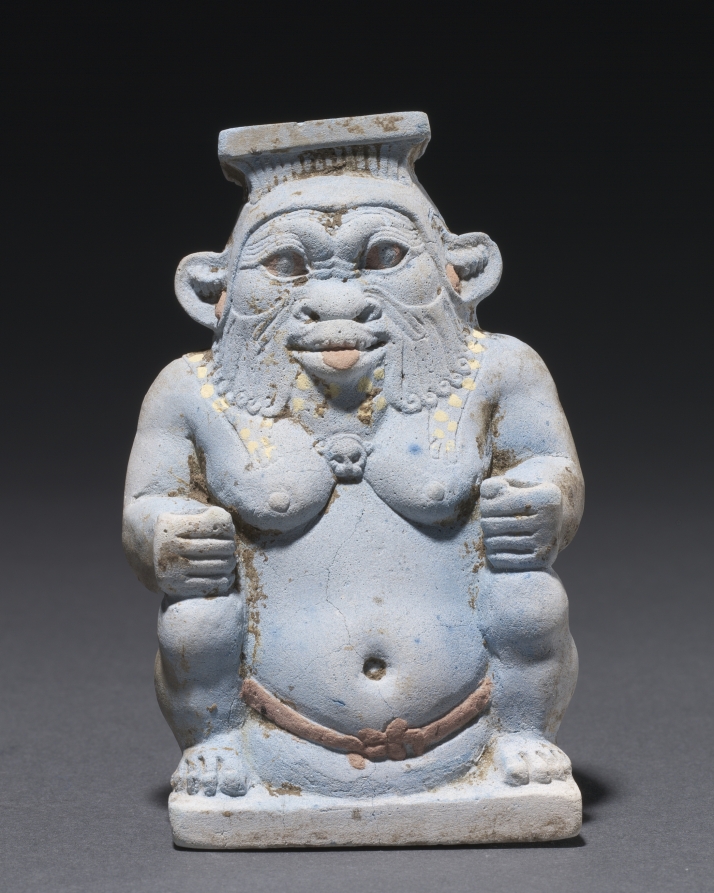
Iconography: dwarf demon, mask face, plumed crown
Mask that Faces Evil
Bes’ frontal, mask‑like face—with protruding tongue, leonine mane, and feathered crown—confronts harm directly. Unlike most gods in profile, Bes meets the viewer head‑on, turning thresholds (doors, bedframes, cradles) into guarded sites. He laughs loudly, dances, and brandishes knives to terrify what preys on children and sleepers.
Music, Dance & Sexual Joy
As a companion of Hathoric festivity, Bes protects the pleasures of music, perfume, and sex. Far from prudishness, Egyptian domestic piety sanctified delight as medicine for households: drums and sistrums in Bes’ hands signal that celebration itself wards off gloom and malice when ritually framed.
Objects & Spaces
Beds, mirrors, cosmetic spoons, and amulets carry Bes’ image; painted friezes of dwarfs and dancers animate houses and wayside shrines. Travelers and sailors carried him for luck; mothers placed him near infants and pregnant women; craftsmen etched him on furniture that anchored family life.
Spread & Syncretism
In the first millennium BCE, Bes spreads across the Mediterranean, his approachable image adapted to local tastes while keeping Egyptian functions. At times he fuses with other apotropaic or satyr‑like figures; yet the core remains: cheerfully ferocious protection for the intimate spaces where life begins.
Legacy
From New Kingdom beds to Roman terracotta figurines, Bes taught a levity that was not trivial: to face harm, make music; to protect sleep, wear a grin with teeth. Museums preserve countless small objects where his grin still guards the threshold.
Museum objects
Reviewed Open Access works. Public domain. Captions name title, accession, and museum.
In practice
Reflect on how Bes's domains (music, dance) show up in your own life. What would it mean to honor this deity's pattern through a single honest action today?
Frequently asked questions
- Who is Bes in Egyptian mythology?
- Apotropaic household god who wards off evil and delights children; linked with music and festivity.
- What domains is Bes associated with?
- Bes is associated with music, dance, protection, childbirth.
- What symbols represent Bes?
- Common iconography for Bes includes dwarf demon, mask face, plumed crown.
- What role does Bes play in Egyptian religion?
- Bes’ frontal, mask‑like face—with protruding tongue, leonine mane, and feathered crown—confronts harm directly. Unlike most gods in profile, Bes meets the viewer head‑on, turning thresholds (doors, bedframes, cradles) into guarded sites. He laughs loudly, dances, and brandishes knives to terrify what preys on children and sleepers.
- How do you pronounce Bes?
- BESS IPA: [bɛs] (Egyptological: Bs ≈ 'Bes') Grotesque yet friendly guardian; widely popular in domestic contexts.