Essence
An encyclopedia article on pharaonic magic, deposited by the University of Wales Trinity Saint David, states that both the concept heka and the god Heka are attested from the Old Kingdom into the Coptic period. The earliest mention of the god it cites is in the funerary temple of Sahure, in Dynasty 5, and both the concept and the god are named in Pyramid Texts spells 472 and 539.
The same article says Heka could be described as the ba of Re. Coffin Text spell 261 is concerned with becoming the god Heka. In the Instruction for King Merikare, heka is a power the creator gave to people so they could ward off enemies and stay alive. The article also notes that heka could be destructive, not only protective. English 'magic' is the usual translation. It is not a separate hobby beside religion.
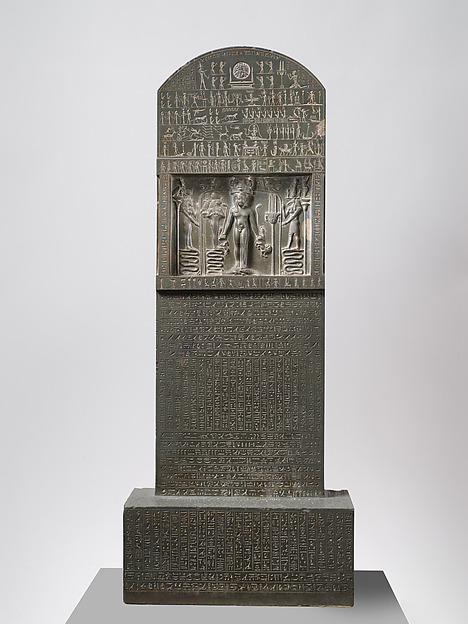
In image
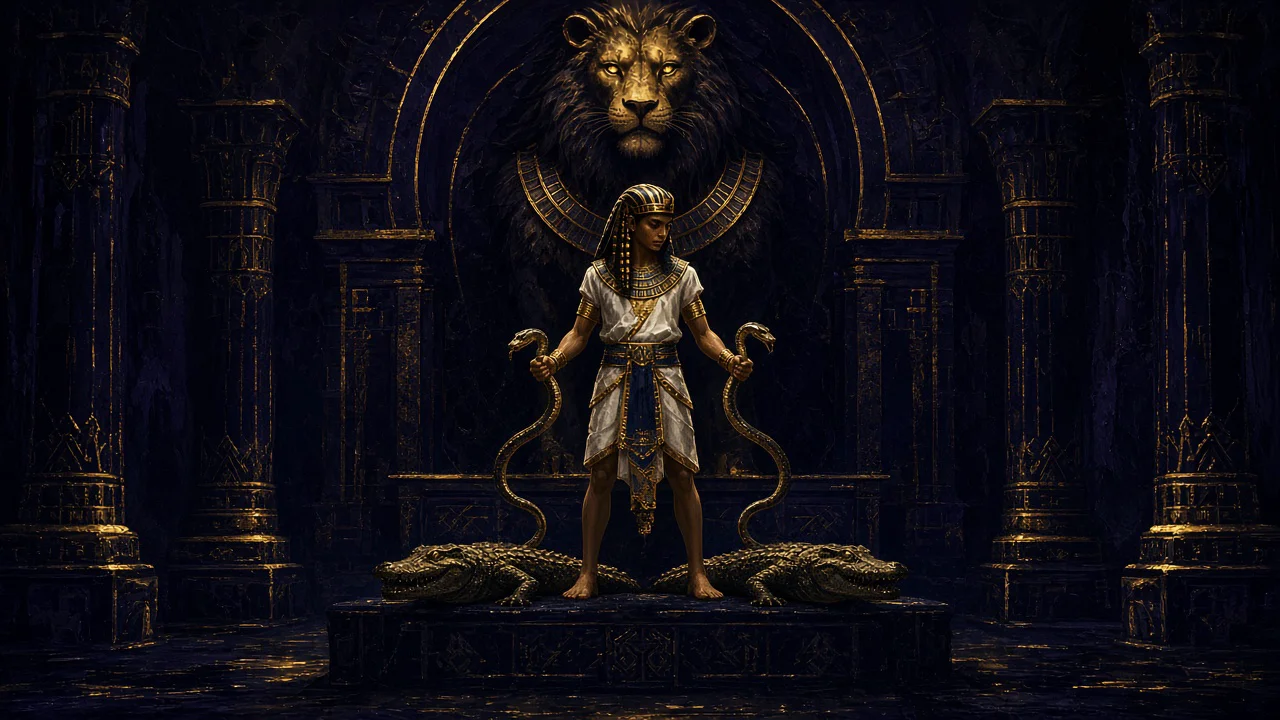
The Metropolitan Museum's magical stela of Horus the Child (accession 50.85, 360 to 343 B.C.E.) shows the child nude, with the sidelock of youth, holding snakes, scorpions, an antelope, and a lion. His feet rest on two crocodiles. The museum says these creatures symbolize his magic powers. Isis and ibis-headed Thoth flank him. Bes appears above. The top of the stela incises the sun's night journey, and its uppermost scene shows rebirth, with Thoth, four baboons, and King Nectanebo II in adoration.
The museum's note on the stone says Horus was once cured of a poisonous bite, and that this story is written on the stela. Healing images of this kind are one public face of heka. They are not the whole of the concept.
Practice on this site
Read the stela record, then the pages for Horus and Thoth. Treat the game and ritual prompts elsewhere on the site as practice. They are not ancient prescriptions, and they unlock nothing.
Museum objects
Reviewed Open Access works. Public domain. Captions name title, accession, and museum.