Essence
UCLA's article on the ba says the word was written with a saddle-billed stork or a human-headed falcon and is often translated 'soul.' That translation is incomplete. The notion runs from the manifestation of divine power to the impression a person makes on the world. The ba is one of several components of a person, listed there beside the ka, the body, the shadow, the heart, and the name.
UCLA's article on the akh translates it as an effective spirit. It can name the transfigured dead, and also living people who acted effectively for someone else. Its basic sense is effectiveness, and a reciprocal tie that crosses the boundary between spheres.
The body they need
UCLA's article on mummification says the preserved body could be reanimated by the ka, which it glosses as spiritual essence, and that destruction of the body threatened the survival of the person for eternity. Without a physical manifestation, whether the body or an image, no aspect of ka, ba, or akh could function effectively. Mummification was used primarily by elites from the early Old Kingdom, with simpler forms later available to people of lesser means.
Practice on this site
Read this page beside the funerary literature overview and the Open Access objects mapped to it. Modern talk of 'the Egyptian soul' as three layers is a shorthand. The articles above are the limit of what this page claims.
Museum objects
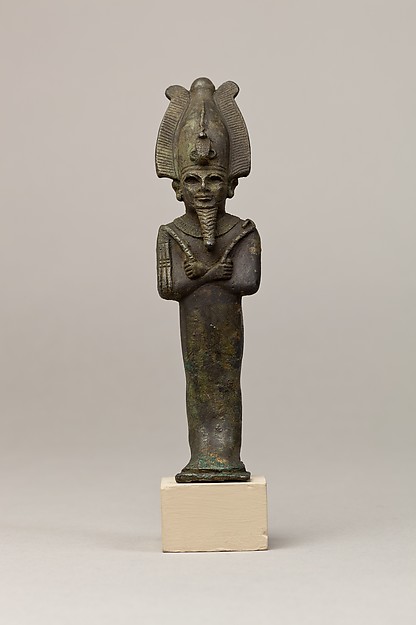
Reviewed Open Access works. Public domain. Captions name title, accession, and museum.