Domains & Iconography
Domains: craft, creation, Memphis
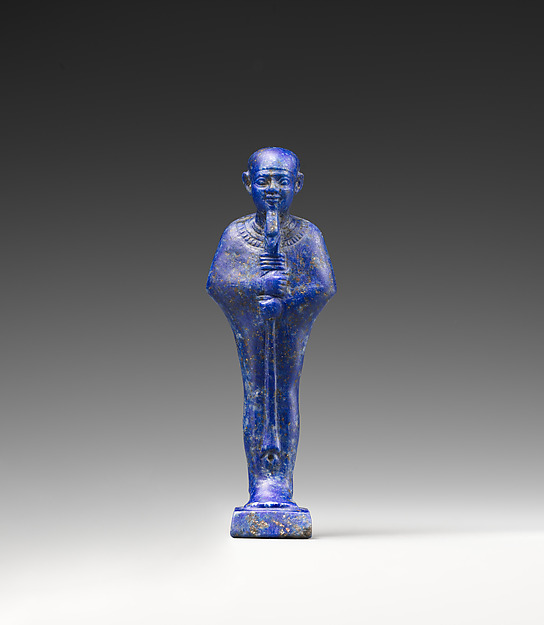
Iconography: mummiform, was-djed-ankh staff, skullcap
Memphite Theology — Heart & Tongue
In Memphite doctrine, Ptah creates through 'heart and tongue'—intellectual conception within and efficacious utterance without. The heart (jb) forms plans; the tongue speaks them into ordered existence. This elegant theology, echoed on later inscriptions and famously summarized on the Shabaka Stone, aligns the craftsman’s practice with cosmogony: design and word bring worlds into form. Creation here is not brute force but articulate crafting, measured and precise.
Because reality is spoken and shaped, justice becomes architectural: the 'was‑djed‑ankh' composite staff Ptah holds—dominion, stability, life—reads as the grammar of an ordered cosmos. Kingship, law, and workshop together learn from Ptah that durable order depends on good plans, true words, and exacting hands.
Cult, City & Craft
Memphis, capital at various periods and perennial industrial hub, venerated Ptah as patron of metalworkers, sculptors, builders, and designers. Temple precincts abutted workshops that supplied cult and court; the king’s authority and artisans’ skill converged under Ptah’s aegis. Liturgies and festival calendars honored his steady presence as craftsman‑creator, whose gifts were not only cosmic but practical: the right tool, the right measure, the right seam.
Funerary piety absorbed Ptah’s making into hopes for renewal. In the first millennium BCE, Ptah unites with Sokar and Osiris (Ptah‑Sokar‑Osiris), a triad that ties craft, necropolis, and regeneration. Votive figures of this composite accompanied burials; their dense iconography testifies that careful making was itself a path toward enduring life and memory.
Iconography
Ptah appears mummiform, tightly wrapped, wearing a close skullcap, grasping the composite 'was‑djed‑ankh' staff, and standing upon a pedestal associated with Ma’at’s stable foundation. The wrapped form concentrates energy; motionless, he radiates the power of design, word, and ordered intent rather than of kinetic display. This restraint is itself a theological statement: the world endures by structure, measure, and speech.
Relations & Triads
In Memphite triads Ptah partners with Sekhmet (heat/power) and their son Nefertem (lotus, perfume, healing). The trio integrates fire, craft, and fragrance: force must be measured; making must be enlivened; and order must be sweetened. Ptah’s theology complements Heliopolitan solar creation (Ra‑Atum, Khepri) and Theban hiddenness (Amun), yielding a polycentric religious map where multiple truths are harmonized rather than collapsed.
Legacy
From Old Kingdom workshops to Ptolemaic bronzes and Roman‑period reliefs, Ptah remains Egypt’s philosopher of making—patron of the measured word and the well‑made thing. Museums preserve tools, triads, and statues that allow modern viewers to sense an Egyptian conviction: that craftsmanship is a sacred vocation through which mind and speech stabilize the world.
Museum objects
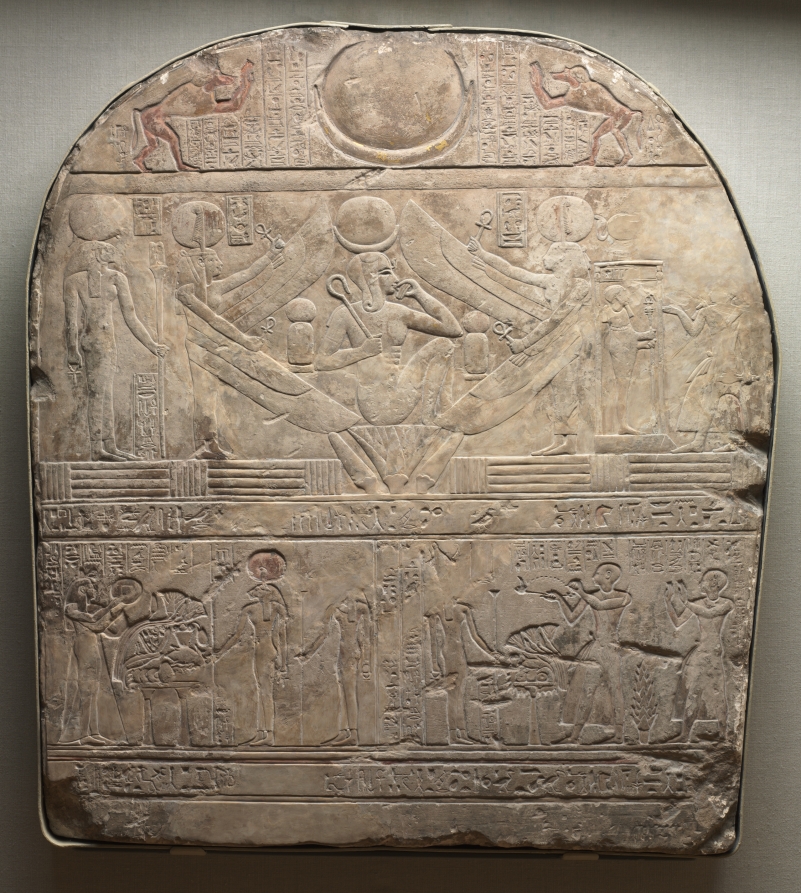
Reviewed Open Access works. Public domain. Captions name title, accession, and museum.
In practice
Reflect on how Ptah's domains (craft, creation) show up in your own life. What would it mean to honor this deity's pattern through a single honest action today?
Frequently asked questions
- Who is Ptah in Egyptian mythology?
- Creator god of Memphis tied to craftsmanship and creation through heart and tongue (mind and speech).
- What domains is Ptah associated with?
- Ptah is associated with craft, creation, Memphis.
- What symbols represent Ptah?
- Common iconography for Ptah includes mummiform, was-djed-ankh staff, skullcap.
- What role does Ptah play in Egyptian religion?
- In Memphite doctrine, Ptah creates through 'heart and tongue'—intellectual conception within and efficacious utterance without. The heart (jb) forms plans; the tongue speaks them into ordered existence. This elegant theology, echoed on later inscriptions and famously summarized on the Shabaka Stone, aligns the craftsman’s practice with cosmogony: design and word bring worlds into form. Creation here is not brute force but articulate crafting, measured and precise.
- How do you pronounce Ptah?
- pt-AH / pə-TAH IPA: [ptɑː]/[pəˈtɑː] (Egyptological: Ptḥ ≈ 'Ptah' [p.tʼaː]) Name associated with Memphite theology; consonant cluster reflects Egyptian orthography.