Egyptian Amulets: Ankh, Wedjat, Djed and Scarab
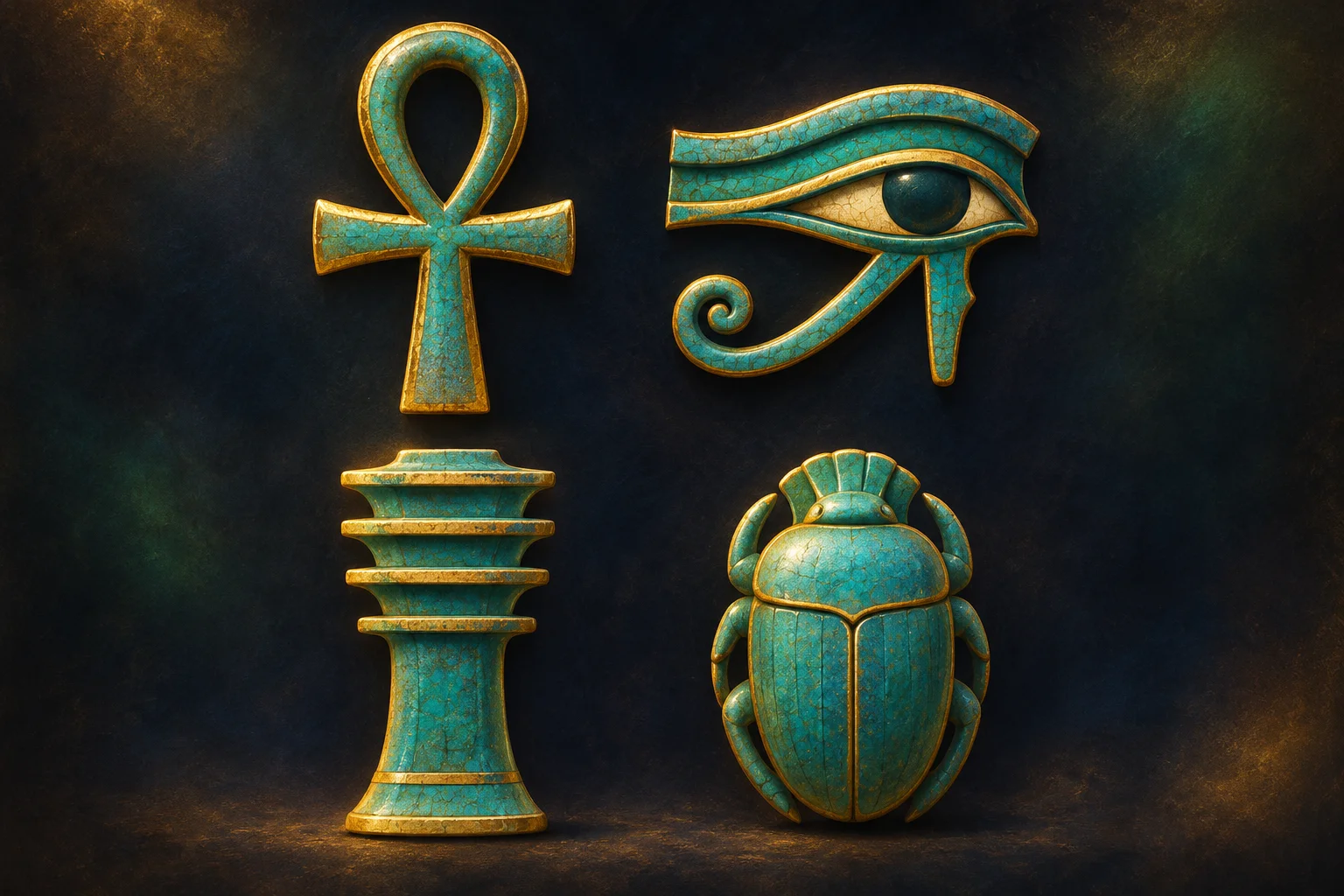
AI-generated symbolic illustration. Consult the linked museum records for photographs of historical objects.
An Egyptian symbol becomes easier to understand when you start with an object. A name and a one-word meaning are a useful beginning; a dated piece, its material and its recorded context let you ask better questions. This guide follows four recognizable forms through objects in The Metropolitan Museum of Art. Each section links to the evidence behind its historical summary.
What made an object an amulet?
Egyptian amulets were objects believed to confer beneficial powers. Shape, material, color, inscriptions and ritual actions could all contribute to their meaning. People wore them during life; amulets were also placed with the dead. Isabel Stünkel's museum essay explains why an object’s function depends on more than its outline.
Begin by separating an ancient belief from your own response to it. A museum record can describe what an amulet was intended to do. That intention is historical evidence about its users, rather than a promise that the object will produce the same result for someone today.
Evidence: The Met — Isabel Stünkel, Ancient Egyptian Amulets
Ankh: life expressed as a sign
The ankh was a hieroglyph used to write words for life and living, and became a broader symbol of life. The Met’s faience ceremonial implement 30.8.30 includes the name of Thutmose IV inside its loop. The museum dates it to about 1396–1386 BCE and records its discovery in his tomb.
Notice how much more specific this is than calling every ankh a protective pendant. This example is a ceremonial implement with a royal name and a recorded findspot. When you meet the same sign in another medium, ask what the surrounding image, inscription or object adds to its meaning.
Evidence: The Met — Ceremonial Implement in the Shape of an Ankh, 30.8.30
Wedjat: the restored eye of Horus
The wedjat represents Horus’s healed eye. The Met explains its combination of human and falcon features through Horus’s association with the falcon; in the myth described in the record, Seth injures or takes the eye and Thoth restores it. The amulet was believed to convey protection and regeneration.
Object 11.215.130 is a small faience example from the palace of Amenhotep III at Malqata. Its record also notes a sign for good or beautiful on the reverse. Look at both sides of an object when photographs are available: a front-facing symbol chart can miss information that matters to its interpretation.
Evidence: The Met — Wedjat Eye Amulet, 11.215.130
Djed: permanence and the connection to Osiris
The djed pillar signified permanence and later became associated with Osiris’s backbone. The Met identifies its Late Period example 26.7.1039 as probably a funerary amulet, intended to connect the deceased with Osiris and secure permanence. The word probably matters: the catalogue is making an interpretation with a stated degree of confidence.
Read the museum’s qualification along with its conclusion. In your own notes, distinguish an observable feature, such as the object’s shape, from an interpretation of how it was used. Keeping those two kinds of statement visible makes research more useful than collecting confident-sounding definitions.
Evidence: The Met — Djed Pillar Amulet, 26.7.1039
Scarab: renewal, with different forms and functions
A jasper scarab in The Met, object 19.3.156, was found attached to a mummy’s right-hand ring finger. Its base is uninscribed; the museum interprets the beetle form itself as an amulet of rebirth. Its explanation connects the Egyptian word for beetle with a similar-sounding word for coming into being.
A winged scarab offers a useful comparison. Object 25.5.1a–c consists of a beetle and two separately made bird-like wings, with holes for fastening it to mummy wrappings. Both examples concern renewal, but their construction and recorded placement differ. Avoid treating every scarab as an interchangeable copy of one ideal symbol.
Evidence: The Met — Scarab, 19.3.156; The Met — Winged Scarab Amulet, 25.5.1a–c
A simple way to read a museum record
Choose one linked object and record its accession number, date, material and findspot. Then write two short sentences: what you can see, and what the museum says it meant. Add a third line for anything the record leaves uncertain. Save the original link so that you can return to the evidence rather than rely on a remembered image.
For contemporary reflection, you might ask what life, repair, stability or renewal means in your own circumstances. Label that response as yours. It can be a worthwhile practice without being presented as an ancient Egyptian exercise. Continue with Serpent Earth’s Heka and Osiris guides, or use the Open Access collection to compare more documented objects.